Climate Emotions

Anger Monitor research: ‘constructive’ anger can motivate climate action

23 September 2023

Anger is a powerful emotion. The Anger Monitor, a project of the Mind Works Lab, surveyed people in six countries (including the UK) and identified different types of anger in relation to climate change.

‘Toxic’ anger is difficult for climate activists to engage with, and is the type of anger that can be easily weaponised by extremists. But ‘constructive’ anger can motivate climate action, the Anger Monitor report argues, especially if activists harness the power of constructive anger through empowering campaign actions (these could include ‘feeling heard’ or taking actions to prepare for extreme weather conditions).

Echoing previous research that has recommended combining the strong emotions elicited by climate impacts with tangible mitigation/energy saving actions, the Anger Monitor research advises leaning into the range of emotions that different types of climate content invoke. Anger and worry levels can be raised by worsening climate impacts, but a sense of qualified hope can be instilled from seeing others taking tangible action.

Reference article:

  • Source: Mindworks -
  • Date: 29th November 2023

Tags:

The latest from the Climate Emotions timeline:

Opinion Insight 20th September 2026

Tracker data: Support for local renewables still higher than we think it is

The Climate Barometer Tracker has followed public and MP support for local renewable infrastructure in their area since 2022. Since the beginning, we have pointed to a perception gap between the (high) public support for local renewables projects such as new solar parks and wind farms, and what the public and MPs think support and opposition looks like.

The latest wave of the tracker shows that this gap remains: public support for new local renewable projects remains high. People, and their representatives continue to underestimate this support, and overestimate opposition.

In this wave, we also asked those who have personal experience with local infrastructure projects, how they felt about them. Overall, those who have a newly proposed project in their area, and those who have a fully or partially built one, feel accepting, proud, and relieved. A minority report feeling worry, anger, and upsetness, but for the most part, emotional responses are positive.

Those experiencing the most negative emotions were people living in areas where a renewable energy project had been rejected.

Opinion Insight 13th July 2026

Hot and bothered: Britons blame climate change for June 2026 heatwave

New polling by More in Common shows that 86% of the UK public believe climate change to be either entirely or partially responsible for the June 2026 heatwave. This holds true even for those opposing net zero, with 63% of them seeing climate change as at least in part to blame for the extreme heat.

At the same time, more than 4 in 5 think the UK is unprepared to cope with extremely hot weather (84%) and more than 3 in 4 see the country as ill-equipped to deal with water shortages and drought (77%).

Asked about which groups they think are most negatively affected by extreme heat, the elderly (88%) and children (68%) were seen as worst impacted, closely followed by “ordinary people” (66%).

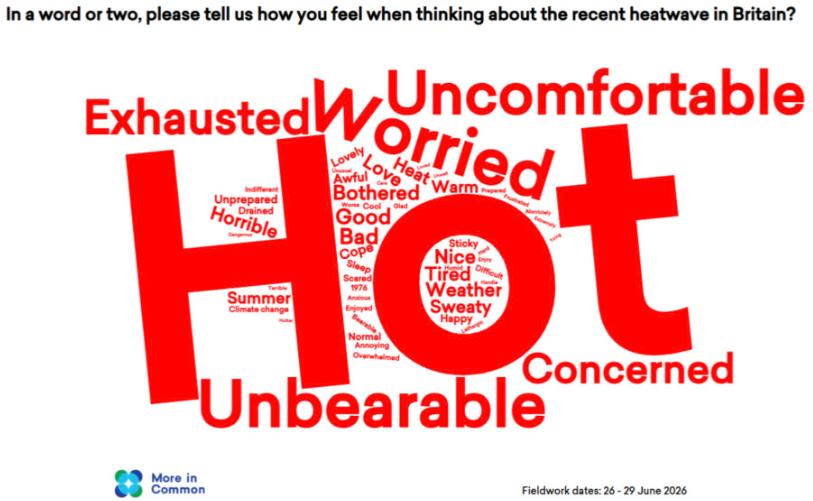
Describing the most recent heatwave in their own words, responses revealed a public struggling to cope, with words like “hot”, “worried”, “unbearable” and “uncomfortable” being mentioned most often:

Relatedly, the majority expect more political leadership on the issue: 59% of the public say they want the government to help people like them cope with the impacts of extreme heat, compared to 26% who think the government should do the same amount and only 5% who say the government should do less to help people like them cope.

  • Source: More In Common
  • Author: More In Common
  • Date: 13th July 2026
View Climate Emotions timeline now

Add Feedback