Heat, Drought & Wildfires

How AC use is changing in the UK amidst extreme heat

07 April 2025

A survey of 1,500 UK households carried out in 2023 has found that 19% of households reported using AC, compared with figures of around 3% in 2011 and approximately 5% of UK homes in 2018 reported in other sources. This suggests a substantial shift in domestic cooling practices over the past decade.

The timing of AC purchases was particularly interesting: 81% of AC users reported purchasing their AC between 2022 and 2023, while only 19% had purchased it before 2022. This suggests that the experience of recent extreme heat (such as the record breaking 40C heatwave of 2022) and overheating may be contributing to a rapid increase in demand for domestic cooling.

The findings point to a changing UK debate around domestic cooling, with households increasingly turning to mechanical cooling as they experience more frequent and severe heat. The authors note that:

“If summer warming trends continue, our survey suggests, AC adoption is likely to increase, placing both a significant burden on electricity grid peak demand, and leading to economic inequalities, particularly among lower socioeconomic groups.”

Reference article:

  • Authors: Fatemeh Khosravi, Christina Demski, Louise King, Larissa Gross, Matthew Scott
  • Date: 7th April 2025

The latest from the Heat, Drought & Wildfires timeline:

Wider Context 26th August 2026

40,000 extra people died on England’s hottest days between 1988 and 2025

More than 40,000 extra people died on England’s hottest days between 1988 and 2025 compared with what would be expected in normal temperatures, according to new ONS data.

Deaths from high heat are expected to keep climbing as climate change and an ageing population combine, with older people, children and the unwell most at risk.

The strain has been visible across the health system: A&E departments saw their busiest period on record, with almost 2.5 million attendances a month in May, June and July, with record-breaking heat cited as a key factor. Nurses reported collapsing on shift amid what their union called “inhumane and impossible” conditions.

  • Source: the Guardian
  • Author: The Guardian
  • Date: 26th August 2026
Climate Barometer Tracker 25th August 2026

Experience of heat, drought and wildfires shaped by political worldview

Data from a Climate Barometer & Flooded People survey carried out in March-April 2026 shows how politics plays a clear role in reported experience of heat, drought and wildfires amongst the UK public.

Green (59%), Plaid (55%) and Labour backers (54%) were the most likely to report personal experience of heatwaves/extreme heat, while Liberal Democrats were the most likely to say they have experienced drought and water scarcity (18%).

Plaid Cymru backers were the most likely to highlight an experience of wildfires – even ahead of this summer’s ‘firewave‘, which saw a number of major fires across Wales. They are followed by SNP backers (11%) showing how geography likely plays a role here too.

Yet Reform UK backers are the ones who diverge the most – just 32% report experience of heatwaves and extreme heat – and just 3% say they have experienced wildfires.

Opinion Insight 24th August 2026

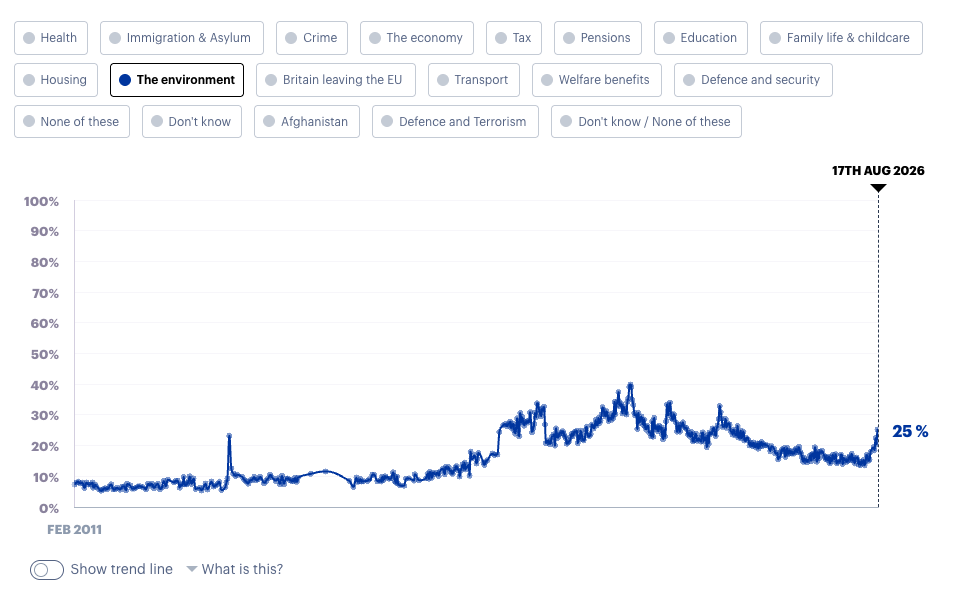
YouGov tracker: Uptick in importance of ‘the environment’ amidst a summer of extremes

YouGov’s long-term data tracking shows an uptick in the belief that ‘the environment’ is one of the UK’s most important issues, amidst a summer of unprecedented heat, fires and drought. Although this increase does not match high points across the trend line, or the impact of summer heat episodes between 2022-2024.

The importance Britons placed on ‘the environment’ rose +11% across this summer – from 14% on the 4th May (pre-heatwaves) to a peak of 25% on the 17th of August, before dropping slightly again to 23% on the 24th of August.

These shifts have been particularly noticeable amongst Lib Dem supporters (+17%, from 23% to 40% in the same period), Labour supporters (+15%, from 22% to 37%) and women (+14%, from 15% to 29%).

This data follows a piece by YouGov published after the June summer heatwave, which suggested that the heat had not impacted people’s climate opinions or actions, despite 71% believing the heatwave was likely to have been caused by climate change.

While this certainly appeared true at the time – the latest data suggests this piece may have been premature in catching the full effects of the extreme heat on environmental salience this summer (especially when previous weather extremes have led to spikes in issue salience data).

  • Source: YouGov
  • Author: YouGov
  • Date: 24th August 2026
View Heat, Drought & Wildfires timeline now

Add Feedback