Net Zero

The government released its latest public opinion tracker figures

13 November 2025

The number of people who agree ‘there is no such thing as climate change’ remains marginal: only 2% agreed with this statement in the latest opinion tracker from the Department for Energy Security and Net Zero.

It’s important – in a period of political instability and the fracturing of the climate consensus – to remind ourselves that despite the turbulence, outright denial of climate change is almost non-existent.

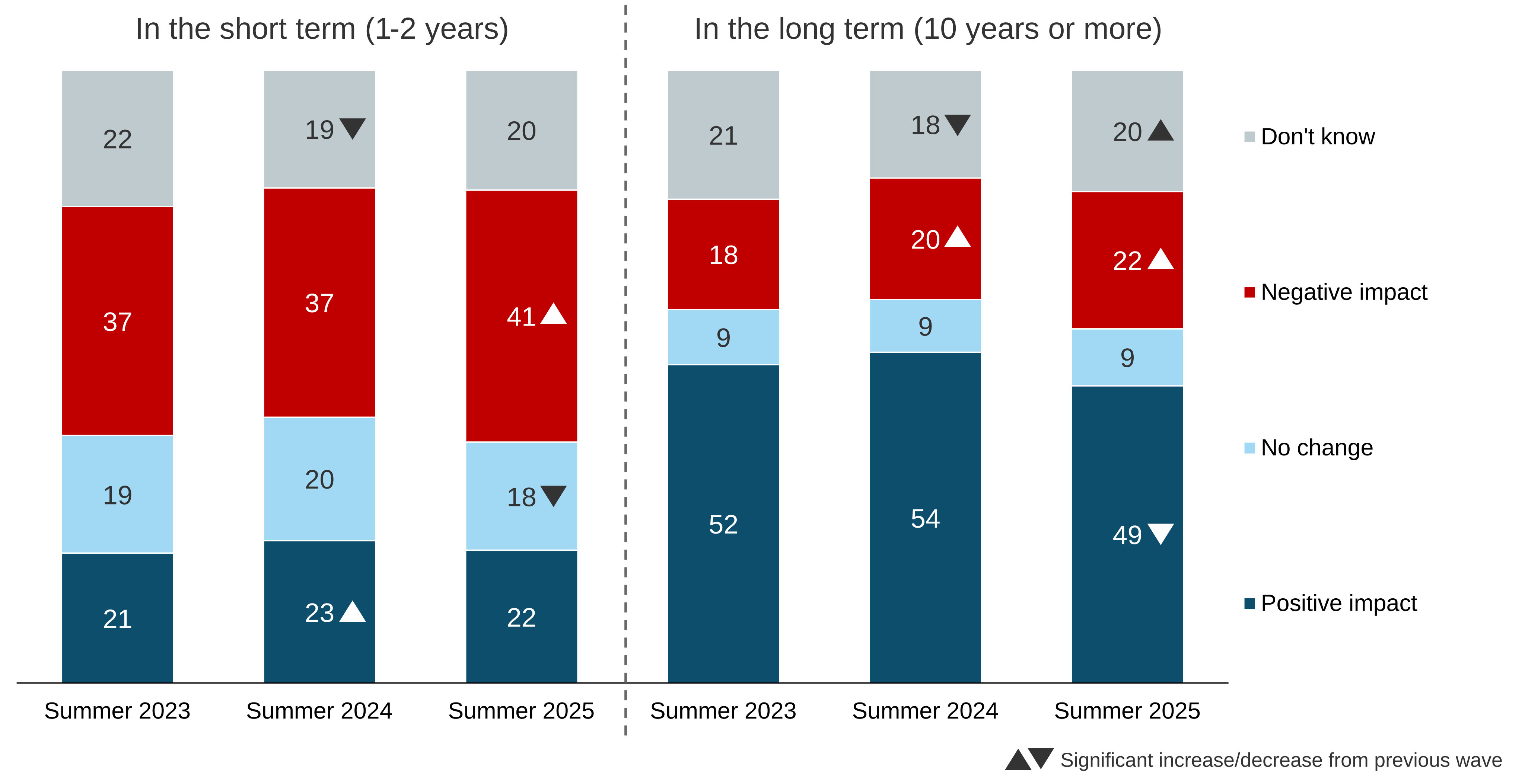
And most people (49% vs 22%) recognise that the energy transition will be positive for the country in the long-term.

But (backing up a signal that is getting louder by the day) the DESNZ data shows that concerns about the costs of green policies are growing, with a record high of people who think the economic consequences of the country’s transition to Net Zero will be negative in the short-term.

Labour has promised to reduce energy bills by £300 a year, and (long-term) the policies being introduced will likely deliver this. But short-term, the financial insecurities that people face (which have little to do with green policies) are being weaponised by opponents of climate action.

Whilst this happens, making the best case for what is currently on the table is equally critical: this requires connecting the ‘how’ and the ‘why’ of net zero alongside telling people’s stories to demonstrate that the transition is both achievable and effective. Read more about the takeaways from Climate Barometer & Public First’s recent net zero message testing research here. 

The latest from the Net Zero timeline:

Opinion Insight 10th February 2026

What drives support for local energy infrastructure?

The government’s newly published Local Power Plan points the country in a direction that the British public support: clean energy that’s transparent, affordable, and delivers real benefits to communities and their local environments.

When we asked about the three most important factors for involving local communities on infrastructure proposals, both the public and MPs were most likely to select “clear, plain language information about the project and its impacts” and “being asked for views early, before decisions are made”. These were followed by “a clear explanation of how views influenced the final decision” for MPs and “independent or trusted organisations running the process” for the public.

When we asked which 3 factors people felt were most important in terms of influencing their support or opposition for local infrastructure projects, they picked: the project’s impact on the local environment, on energy bills and on the local community as the top considerations.

These three priorities are consistently the highest for all groups across age, gender, region, social grade, housing tenure, political support, education level, ethnicity, and whether they live in urban or rural areas; a rare point of alignment between these different subgroups of the public.

Strikingly, what made much less of a difference were people’s views about climate change and net zero.

This doesn’t mean that belief in (or concern about) climate change isn’t a critical foundation on which to build engagement around clean energy in general (this is the core idea behind linking the ‘how and the why’ on net zero, as we argued in our recent message testing work with Public First).

But when it comes to specific clean energy projects, the local impacts and financial considerations loom larger: as the transition becomes ever more place-based, this trend is only likely to accelerate.

Opinion Insight 5th February 2026

Varied levels of support for individual net zero policies

Our tracker shows the enduring popularity of policies that also save on household bills (like installing insulation, or incentives to do so).

Although Low Traffic Neighbourhoods (LTNs) get a bad rep, our tracker shows support outweighing opposition and support gently rising over the past three years.

One way to look at levels of policy support across the piece is that they’re really quite stable – but some are not stable in a good way. When it comes to sales of new gas boilers, and the phase out of sales of new petrol and diesel vehicles, opposition started to outpace support around 18 months ago, and this trend has (slowly) continued. 

View Net Zero timeline now

Add Feedback