Heat, Drought & Wildfires

Stories of extreme weather and community action across the UK

20 July 2026

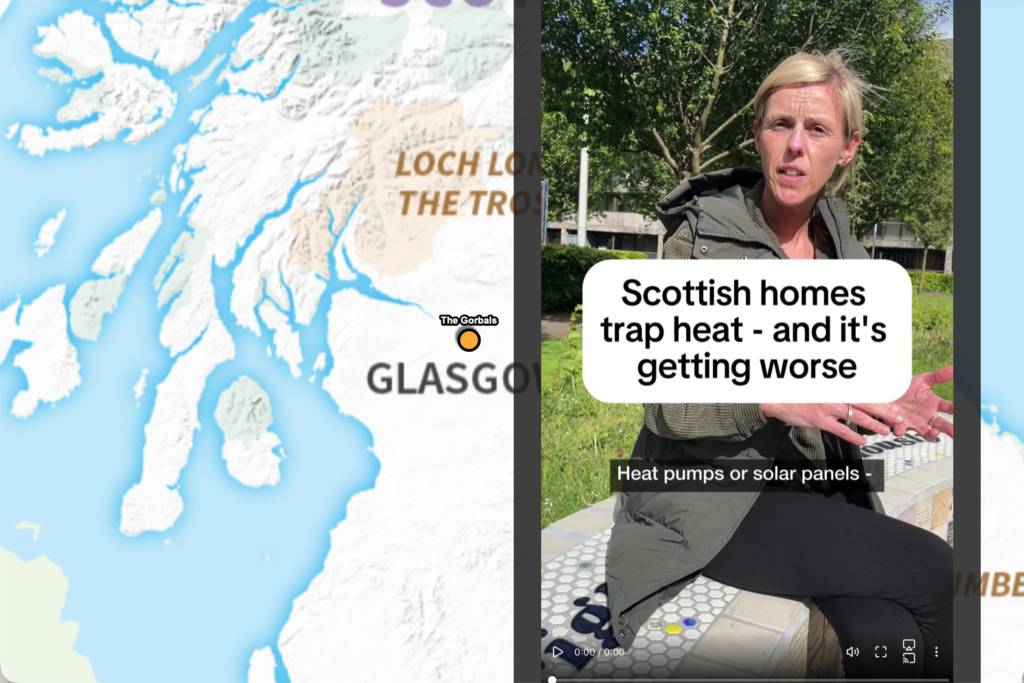
A new piece by Local Storytelling Exchange brings together people’s experiences of extreme weather: from tree planting to preventing waterlogged cricket pitches, to shading schools from the rising heat. Amidst “The new normal”, Exchange are sharing stories and multimedia content to highlight how people in Britain are already adapting to extreme weather, including heatwaves, drought and floods – and spotlighting that they can’t do it alone. Here are a couple of quotes from contributors:

“It’s really challenging when you have relatively small classrooms with up to 30 children and multiple adults. When it’s over 30 degrees in the summer, it’s suffocating.”–Rona Mackie, head teacher at Guildford Grove Primary School

“Houses in Scotland are built to retain heat, which is great in the winter, but it’s problematic if you’re getting temperatures of 30 degrees and your flat is sitting at 27 or 28 degrees for a few days on end. The consequences of that could be massive ” – Dani Waddell, manager of Crossroads Youth and Community Association


Reference article:

  • Author: Local Storytelling Exchange
  • Date: 20th July 2026

The latest from the Heat, Drought & Wildfires timeline:

Wider Context 3rd August 2026

Driest July in nearly 200 years, Met Office says

England and Wales have provisionally recorded their driest July in nearly 200 years, Met Office says. This comes as most of England, and all of Wales declared drought – following four successive summer heatwaves.

  • Source: the Guardian
  • Date: 3rd August 2026
Opinion Insight 3rd August 2026

How do the public engage with climate ‘adaptation’ in 2026?

New research by Climate Outreach shows that support for adaptation action significantly increases when people are shown tangible solutions, such as heatproofing our homes and restoring natural flood defences.

The study – a survey of 7,000 people across Britain and in-depth focus groups across the UK – found that:

  • Most people give equal support for actions that count as adaptation and mitigation. A majority recognises that both adapting to intensifying climate impacts and lowering our future carbon emissions are of equal importance.
  • The terms ‘climate adaptation’ and ‘climate resilience’ aren’t widely understood. Only half of people know what ‘climate adaptation’ means, whilst less than half know what ‘climate resilience’ is.
  • The way climate adaptation is framed makes a huge difference to how much people support it. The more we explain what adaptation actions are and why we are doing them, the more people support the action.

This echoes findings from Climate Barometer’s tracker which shows that adaptation and mitigation are supported equally, as well as past research by Climate Outreach/Cardiff University showing that the public see these broad responses as “two sides of the same coin“.

  • Source: Climate Outreach
  • Author: Climate Outreach
  • Date: 14th July 2026
Opinion Insight 29th July 2026

Heat is making Brits more fearful of the future

Following multiple heatwaves, more than 50% of Britons say they are more fearful for what’s to come in the future, with more than 48% feeling more anxious about climate change. That’s according to polling by Survation for Climate Outreach and Round Our Way.

These views were broadly shared across political divides – 58% of people intending to vote Labour say that the heatwaves have made them feel more anxious about climate change as did 48% of Conservative Voters. Although this fell to around a third for Reform voters (33%).

The research also finds that 51% of people feel that it’s more important for the Government and businesses to tackle climate change, in light of the heatwaves. 61% of Labour’s 2024 voters agreed here, although again this fell to around a third (35%) amongst those who intend to vote for Reform.


  • Source: Climate Outreach
  • Authors: Climate Outreach, Round Our Way
  • Date: 29th July 2026
View Heat, Drought & Wildfires timeline now

Add Feedback