The number of people who agree ‘there is no such thing as climate change’ remains marginal: only 2% agreed with this statement in the latest opinion tracker from the Department for Energy Security and Net Zero.
It’s important – in a period of political instability and the fracturing of the climate consensus – to remind ourselves that despite the turbulence, outright denial of climate change is almost non-existent.
And most people (49% vs 22%) recognise that the energy transition will be positive for the country in the long-term.
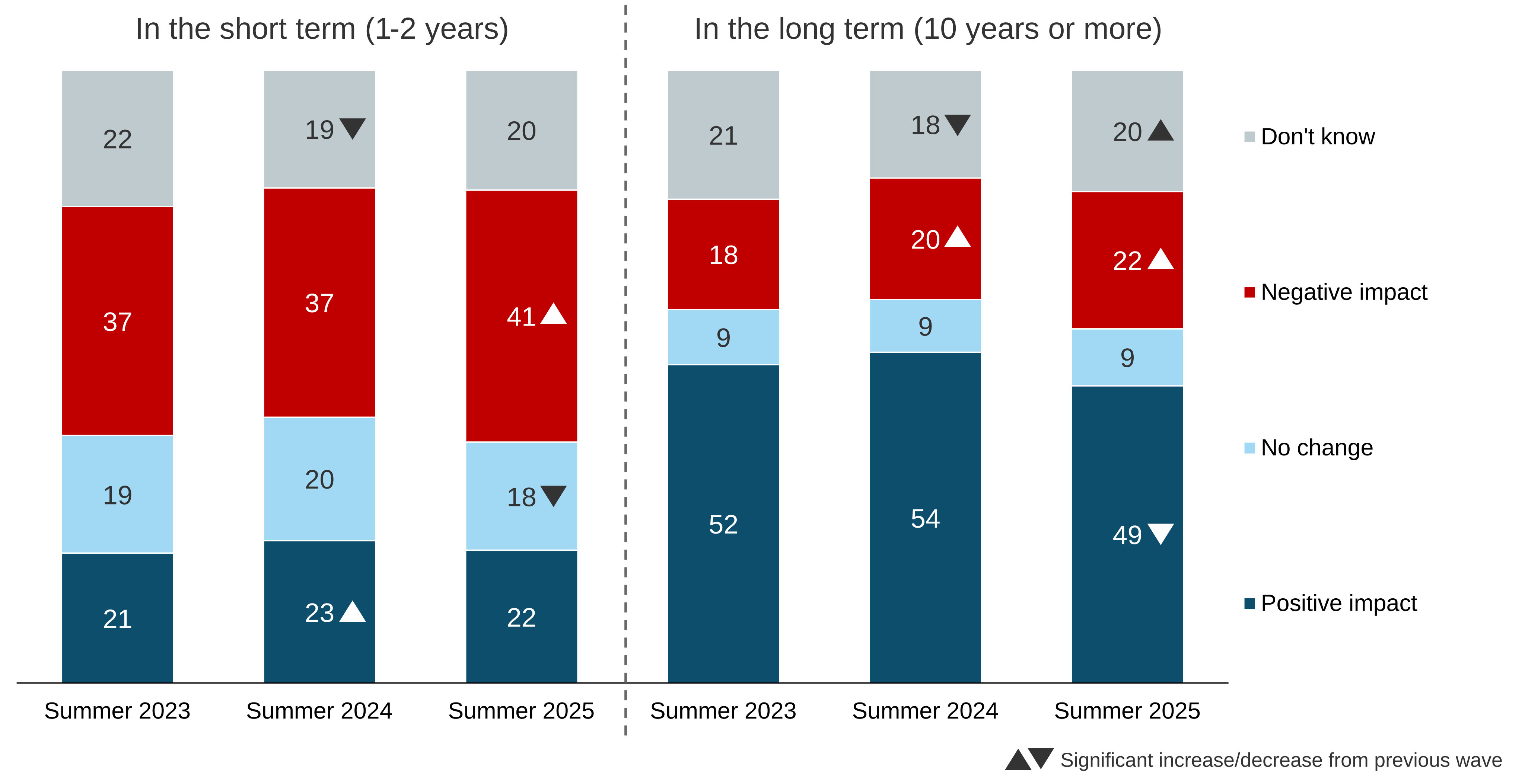
But (backing up a signal that is getting louder by the day) the DESNZ data shows that concerns about the costs of green policies are growing, with a record high of people who think the economic consequences of the country’s transition to Net Zero will be negative in the short-term.
Labour has promised to reduce energy bills by £300 a year, and (long-term) the policies being introduced will likely deliver this. But short-term, the financial insecurities that people face (which have little to do with green policies) are being weaponised by opponents of climate action.
Whilst this happens, making the best case for what is currently on the table is equally critical: this requires connecting the ‘how’ and the ‘why’ of net zero alongside telling people’s stories to demonstrate that the transition is both achievable and effective. Read more about the takeaways from Climate Barometer & Public First’s recent net zero message testing research here.



New MP polling as Burnham enters Number 10
As Andy Burnham takes office as Prime Minister, our latest wave of MP data reveals that most remain firmly behind climate policies.