• Overview
  • Aug '26
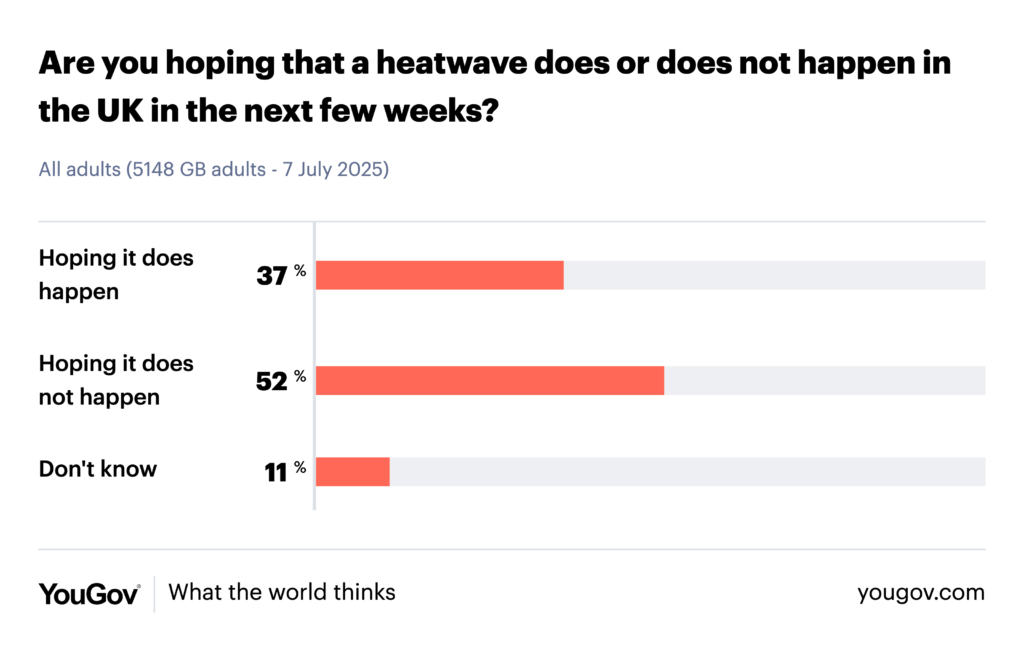
    YouGov poll: Few want another heatwave, except Reform voters.
  • Public strongly back maximum workplace temperature
  • As climate impacts intensify, who should pay for the costs?
  • Poll: Extreme heat is disrupting work, exercise and sleep.
  • Driest July in nearly 200 years, Met Office says
  • How do the public engage with climate ‘adaptation’ in 2026?
  • Jul '26
    Record wildfire season hits UK and Europe
  • England on track this year for the highest number of heat-related deaths
  • Heat is making Brits more fearful of the future
  • Climate coverage hit a high in 2026 due to heatwaves
  • Child heatwave exposure in the UK already at record levels for 2026, as drownings spike
  • Stories of extreme weather and local community action across the UK
  • The Birmingham school making changes to cope with heat
  • ‘Climate’ mostly absent from national media coverage of record-breaking June heatwave
  • Britons blame climate change for June 2026 heatwave
  • Parents concerned for children’s safety during UK heatwaves
  • Poll: People’s sleep and health being impacted by extreme heat
  • Jun '26
    How a local business in Birmingham is adapting to extreme heat
  • Britons view climate preparedness as an urgent, top priority
  • May '26
    The Welsh farmers tackling wildfires
  • The public want urgent action on floods, heat, and droughts
  • CCC: British way of life is under threat from heat, flooding and drought
  • Public believe climate risks are becoming more frequent and severe
  • Apr '26
    Behavioural responses influenced by heat alert severity
  • Mar '26
    Heat resilience policies widely supported as majority continue to think UK is unprepared
  • Sep '25
    2025 is UK’s hottest summer on record
  • Jul '25
    Miliband’s ‘State of the UK’ address on climate impacts
  • To help people prepare for extreme heat, we must communicate better
  • Jan '25
    Majority think UK is not prepared for climate impacts
  • Nov '24
    Unprecedented 2022 heatwave was experienced unevenly
  • Oct '24
    Growing calls for a ‘climate resilient net zero’
  • Sep '24
    Almost half of Britons have personally experienced heat waves
  • Jul '24
    More focus needed on ethnicity and climate impacts link
  • Feb '24
    Decision makers don’t feel prepared for further heat events like the summer of 2022
  • Nov '23
    Making sense of public opinion on climate impacts
  • Oct '23
    Report: How people of colour experience climate change in Britain
  • Sep '23
    Climate Change Committee: How to help the UK public prepare for climate impacts
  • Summer 2023 was the hottest on record globally
  • Apr '23
    Tracker data: Gender divide in MPs’ beliefs about cost of climate impacts
  • Jan '23
    What shapes people’s engagement with heat risks?
  • Oct '22
    Research paper: Media portrayal of heatwaves undermines the seriousness of heat risks
  • Aug '22
    ACT Climate Labs: How to combat misinformation around extreme weather
  • Jul '22
    UK experiences temperatures above 40°C for the first time
  • Mar '20
    Cardiff University polling: concern about heat risks has increased over the past decade but floods still top the risk table
  • Nov '19
    Report: Vulnerable people don’t feel they are at risk from heat
Topic

Heat, Drought & Wildfires

Filter content Please note: The page will automatically update when any filters are changed or set.
  • The Latest

    As Europe warms twice as fast as any other continent, heat risks in the UK are intensifying at an alarming rate. More than 10,000 heat-related deaths have occurred between 2020 and 2024. The summer of 2026 – with more than five heatwaves, an unprecedented ‘firewave’, and an ‘exceptionally serious’ drought – saw close to 3,000 heat-related deaths in May and June alone.

    In this context, heat has become the most commonly reported climate impact in the UK. This topic thread highlights how it is now making Britons more fearful of the future, parents scared for their children’s safety, and is disrupting the nation’s health, sleep and work. 

    Heat risks aren’t felt equally. The data increasingly reveals how heat, drought and fires are experienced differently due to politics, region, income and ethnicity. And at the local level people are facing up to heat, drought and fires in different ways: from Welsh farmers embracing nature-friendly approaches, to Birmingham schools and restaurants adapting to the heat.

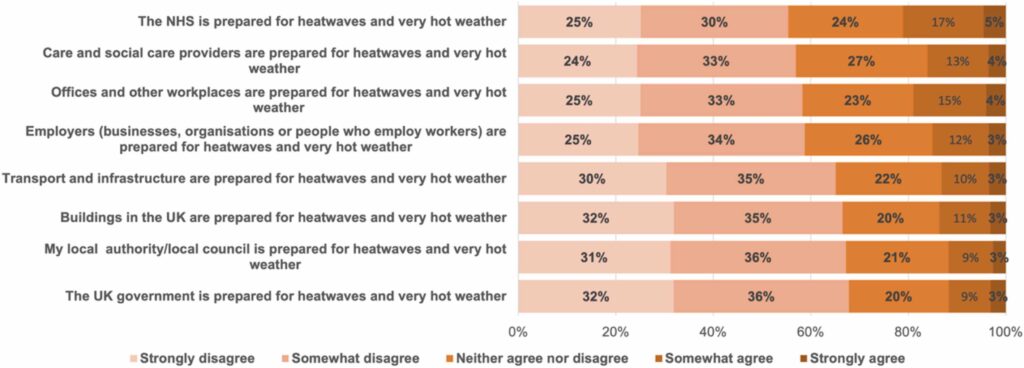
    But despite community actions, the nation has repeatedly warned that we are not prepared. This widespread sentiment underpins why people want climate risks to be taken much more seriously – with urgent action to build resilience seen as a ‘top priority’.

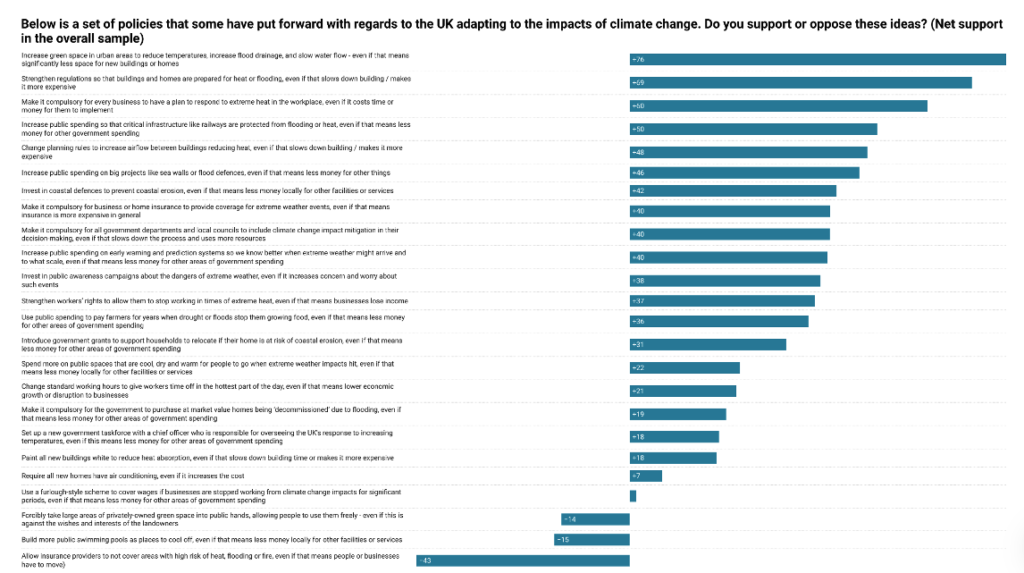
    In practice, this translates into support for maximum working temperatures, more greenspace, better regulations, and solid plans put in place for when heat, drought and fires hit. With the affordability of many measures remaining front and centre – rather than the burden falling to those worst affected, the public will be looking to the government and the worst polluters to step up.

    This thread was developed with input from the Centre for Climate Change and Social Transformations (CAST), Local Storytelling Exchange, and Climate Outreach.

  • Opinion Insight 12th July 2024

    More focus needed on ethnicity and climate impacts link

    Our CAST briefing paper co-authored with Dr Charles Ogunbode re-analyses and reviews key insights from the pivotal Spotlight report, as well as CAST climate views survey data.

    We found that people of colour in the UK are disproportionately affected by climate change impacts. Compared to white respondents, people of colour in the UK were more likely to say they have experienced climate impacts personally. They were also more likely to be concerned about climate change and see it as a serious, urgent threat. And while people of colour experience higher climate anxiety levels compared to white respondents, they also reported feeling greater efficacy and hope and expressed greater levels of support for several climate change policies.

    The current evidence base, including the one outlined in the briefing paper, is very limited. Sample sizes don’t allow, for example, robust comparisons to be made between different minority ethnic and racial groups, and this limits their application in campaign and engagement strategies. There is a need a more dedicated focus on the climate views and experiences of people of colour in the UK, with insights budgets that permit truly inclusive samples, prioritisation of projects that paint a more nuanced and richer picture of public opinion on climate change.

    • Source: CAST
    • Authors: Niall McLoughlin, Charles Ogunbode, Adam Corner, Susie Wang
    • Date: 1st July 2024
    Policy Insight 28th February 2024

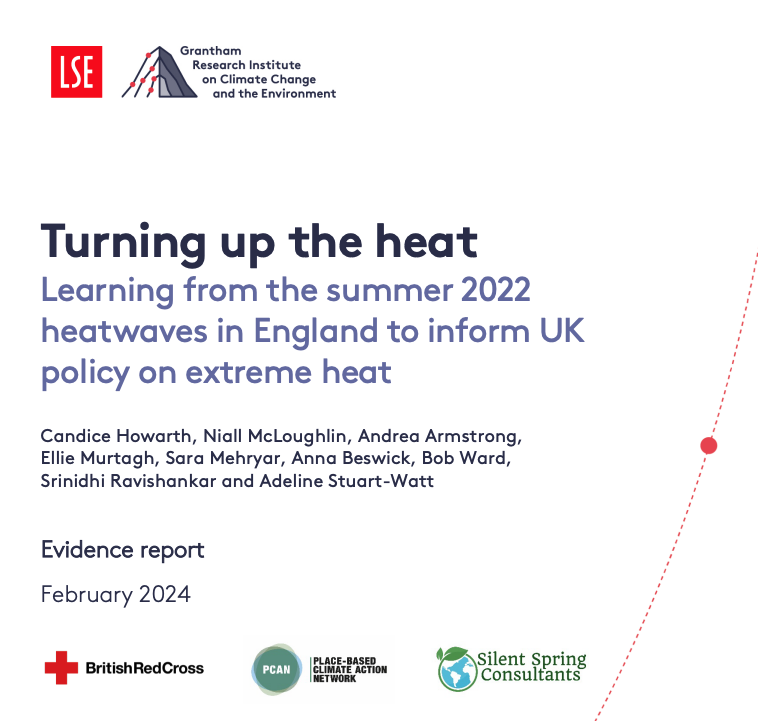
    Decision makers don’t feel prepared for further heat events like the summer of 2022

    Research on the UK’s response to the record breaking 2022 summer heatwaves has found that decision- makers, first responders and community feel England is “not prepared” to manage future extreme heat events – particularly if these were to occur more frequently.

    Reflecting on the 2022 heatwave response across England as a whole, as well as specific regions (London, Manchester and Yorkshire and Humber), research participants expressed concerns about a lack of preparedness for the heat, a lack of specific resources and funding, as well as the need for better communication, public engagement and education.

    In a related policy note, the authors highlight that:

    “The heatwave season of 2022 serves as a warning that England and the rest of the UK are not ready to respond adequately to such extreme heat events. Yet events like this are likely to become more common and severe, thus preparedness needs to be improved to reduce avoidable deaths, minimise the economic impacts of future heatwaves, and shield the most vulnerable from the worst of the effects.”

    Opinion Insight 5th October 2023

    Report: How people of colour experience climate change in Britain

    A new report explores the personal experiences of climate change by people of colour in the UK.

    Charles Ogunbode and colleagues report that awareness (and reported experience) of climate change is high: 92% of British people of colour believe that climate change is happening, 61% report experiencing impacts of climate change, and 85% are really worried about the impact of climate change in places other than the UK.

    The impacts of climate change experienced by British people of colour in the UK include heat waves (over 60%), severe snow disruptions (25%) and flooding in their local area (20%).

    Beyond self-reported experiences of extreme weather, some disproportionate effects of climate change are harder to document – the report notes that London’s Black African and Caribbean population are the most exposed to air pollution, which causes approximately 40,000 deaths per year in the UK, and contributes to many adverse health conditions. 

    • Authors: Charles Ogunbode, Nick Anim, Jeremy Kidwell, Amiera Sawas, Serayna Solanki
    Policy Insight 11th September 2023

    Climate Change Committee: How to help the UK public prepare for climate impacts

    Reviewing research on climate adaptation behaviours, a report prepared by the CAST centre for the Climate Change Committee concluded that most people know very little about how they can prepare for changes such as extreme heat, droughts, or flooding. The authors highlight that it is important for politicians to clearly communicate what types of behaviours are most effective in preparing for a changing climate, and provide advice tailored to the type of risk, alongside other measures like financial incentives for homeowners.

    • Source: Climate Change Committee
    • Authors: CCC, CAST
    • Date: 11th September 2023
    Wider Context 5th September 2023

    Summer 2023 was the hottest on record globally

    June-August 2023 was the “warmest on record globally by a large margin, with an average temperature of 16.77°C, 0.66°C above average.” In addition “August 2023 was the warmest August on record globally, and warmer than all other months except July 2023”.

    • Author: Copernicus
    • Date: 5th September 2023
    Climate Barometer Tracker 26th April 2023

    Tracker data: Gender divide in MPs’ beliefs about cost of climate impacts

    Our Climate Barometer Twin Tracker data suggests a gender divide in MP’s opinions about the costs of climate impacts.

    When asked about the cost of tackling climate change, the majority of female MPs agreed “It will cost too much not to tackle climate change now and we should be prioritising it while we can still avoid the worst impacts”.

    Less than half of male MPs chose this option in both years they were asked, with notably more male than female MPs saying “It will cost too much to tackle climate change now and we should be prioritising other things at a time when consumers can least afford it”.

    These results mirror wider trends in public surveys, which tend to show women hold heightened risk perceptions on a range of issues relative to men’s reduced concerns about different threats.

    Media Insight 18th October 2022

    Research paper: Media portrayal of heatwaves undermines the seriousness of heat risks

    According to research on the media coverage of European heatwaves in 2019, the images appearing in news media about heatwaves and extreme heat generally depict people having “fun in the sun”, across the UK, France, Germany, and the Netherlands. People were depicted having fun in or near water, and enjoying the weather. When images did show the dangers of heat extremes, people were generally absent.

    The authors highlight this is a problematic way of showing heatwaves, because it removes the human element of extreme heat risk, and marginalises the experiences of those who are particularly vulnerable.

    • Authors: Saffron ONeill, Sylvia Hayes, Nadine Strauβ, Marie-Noëlle Doutreix, Katharine Steentjes, Joshua Ettinger, Ned Westwood, James Painter
    • Date: 18th October 2022
    Wider Context 22nd July 2022

    UK experiences temperatures above 40°C for the first time

    The summer of 2022 in the UK saw numerous temperature milestones breached. On 19th of July, 40.3°C was recorded at Coningsby, Lincolnshire, setting a new UK and England temperature record by a margin of 1.6°C, while multiple stations across England also exceeded 40°C.

    “This heatwave marked a milestone in UK climate history, with 40°C being recorded for the first time in the UK.”

    “The UK’s recent extreme heat was far more intense and widespread than previous comparable heatwaves”

    • Source: Met Office
    • Author: Met Office
    • Date: 22nd July 2022
    Opinion Insight 1st March 2020

    Cardiff University polling: concern about heat risks has increased over the past decade but floods still top the risk table

    Cardiff University survey data shows an increase in risk perceptions around hot and dry weather from 2013 to 2019.

    In 2013 only 23% of respondents thought heatwaves were a fairly or very serious problem. By 2019 this had increased substantially to 72% – although concern flooding is still greater.

    Flooding was considered a fairly or very serious problem by almost all survey respondents (90%), closely followed by coastal erosion (88%), heavy storms (84%) and periods of heavy rainfall (83%).

    The authors note that the “increase in perceptions of heat risks might be partly explained by personal experiences of heat related events (such as discomfort due to hot weather) – in the current survey 70% reported having this experience – as well as media coverage of recent heat-related events in the UK and worldwide.”

    • Authors: Steentjes, K, Demski, C., Seabrook, A., Corner, A. & Pidgeon, N.
    • Date: 1st March 2020
    Opinion Insight 1st November 2019

    Report: Vulnerable people don’t feel they are at risk from heat

    In a report that offers a critical evaluation of the Heatwave Plan for England, survey data shows that most people – including those who are most vulnerable – don’t tend to see themselves as being at risk from heat. The authors write:

    Most people had positive views of hot weather, and for many it was something they looked forward to as it invoked feelings of good health and well-being. In addition, most adults did not feel that hot weather posed a risk to themselves. As a result, protective measures were often not taken, even those that people felt were effective, such as staying out of the heat and in the shade.

    Only 40% of participants aged 75 or older saw themselves personally at risk of hot weather. According to many of those interviewed, risk was associated with physical and mental frailty, not age itself, and there was some resistance, even resentment, to any ‘vulnerable’ label that may be applied to them in this context, as they did not consider themselves ‘frail’.

    • Authors: Lorraine Williams, Bob Erens, Stefanie Ettelt, Shakoor Hajat, Tommaso Manacorda and Nicholas Mays
    • Date: 1st November 2019
Loading more posts...

Add Feedback