Net Zero

How did climate show up at the 2026 elections?

11 June 2026
Photograph: Red Dot via Unsplash

The 2026 Local and Devolved elections were some of the most consequential elections in decades.

Dramatically splintered voting patterns (in the English local elections, and in the fight between Plaid Cymru and Reform in Wales in particular) redrew the political map.

To get a handle on if and how climate change showed up at the 2026 elections, we partnered with Climate Outreach, and ran a rapid analysis of 76 election leaflets across five areas (East Aberdeenshire in Scotland, Afan Ogwr Rhondda in Wales, Milton Keynes, Suffolk County Council and Lewisham in England), as well as examining some key party manifestos from the Welsh (e.g. Plaid Cymru, Welsh Greens, Reform Wales) and Scottish elections (e.g. SNP, Scottish Labour, and Scottish Greens).

This built on our previous partnership focused on the Gorton & Denton by-election.

Did climate change take a ‘back seat’? And if so, is this a problem or a sign that the climate discourse is evolving?

The big picture

Explicit mentions of ‘climate’ related words (such as ‘climate’, ‘carbon’ and ‘planet’) were few and far between (just 18 mentions out of 25,000 words) in the 76 election leaflets analysed. We found no use of terms like ‘net zero’, ‘emissions’, ‘greenhouse’, ‘global warming’, or ‘decarbonise’ in the leaflets.

In the manifestos, these terms were used more readily.

For instance, ‘climate’ and ‘net zero’ showed up more than 30 times in total in the SNP’s manifesto. And the Scottish Green Party had one of the strongest climate framings with more than 60 uses of these terms, alongside highlighting the importance of green jobs, renewable energy and active travel as responses to tackling climate change.

So in Scotland, in particular, there were signs of climate showing up on its own terms.

But in general, climate was far from the main story. On the face of it, this doesn’t sound like good news: have political parties across the spectrum gone cold on climate change? Or is climate change and nature showing up in other ways?

Salience and confidence

One of our recent newsletters questioned whether the ‘salience’ of climate change as an electoral issue is the best or only way to understand public engagement with climate change (or the policies required to address it).

The public are probably never going to rank climate change on a par with the NHS or the cost of living as a top concern over a long period of time, so we should expect ebbs and flows in how prominent ‘the climate’ is in public and political discourse.

Our own polling, and Climate Outreach data, regularly shows strong support for the nuts and bolts of the clean energy transition and even stronger support for protecting nature and wildlife. Our recent polling on perceptions of climate impacts and adaptation policies show high levels of concerns about heatwaves, floods and droughts.

So in a fragmented multi-party era, with a fragmented political consensus on net zero to match, it’s too simplistic to say that low salience equals a lack of care among the public.

Communication specialists have spent years arguing that campaigners and politicians should ground climate change in people’s everyday concerns and address the day-to-day challenges (e.g. the cost of public transport or heating homes) that can be a barrier to getting traction on climate change as an ‘issue’.

But implicit in these calls is that communicators use these strategies as a ‘way in’ to bigger conversations about climate change (not as a way to avoid them).

The very low number of explicit mentions of climate change and nature protection in these election materials seems to signal a lack of confidence (including from political parties supportive of climate action) in joining the dots back to climate change.

However, climate-adjacent issues did show up in other ways.

Cost of living: fairness framing in action?

Unsurprisingly, across the devolved election manifestos, energy and affordability was one of the key ways that climate and environment issues were communicated (which is what many messaging studies recommend).

For instance, words like ‘bills’, ‘costs’, ‘cost of living’ and ‘afford/affordability’ together showed up more than 100 times in the SNP’s manifesto alone. Similar terms were also used quite frequently by Plaid, Scottish Greens, Welsh Greens and Scottish Labour, with a link to climate change:

“It’s been a difficult few years for people across Scotland. Our bills are through the roof, and the climate is in crisis.”


Scottish Greens Manifesto

“A more energy secure Scotland will see us build the renewable energy generation that will lower bills, protect us from international shocks and secure good jobs for those currently employed in our offshore energy sector.” 

SNP Manifesto

In the leaflets we analysed, there were fewer energy affordability mentions. But where they were present, climate messaging was embedded within wider concerns about energy affordability and energy independence. In fact, there were some interesting examples of (pro-climate) parties using fairness framings to argue for regional benefits from the energy transition:

“The North East powers the country. We deserve a fairer deal! […] Lower energy bills: Pass on the low cost Scottish renewable energy to consumers. Insulate homes across the North East of Scotland.” 

Scottish Liberal Democrats 

“An energy rich Scotland should mean energy rich Scots. A FRESH START WITH LOWER ENERGY BILLS.”

SNP

There were also examples of (anti-climate) parties using cost-based arguments to argue against renewables:

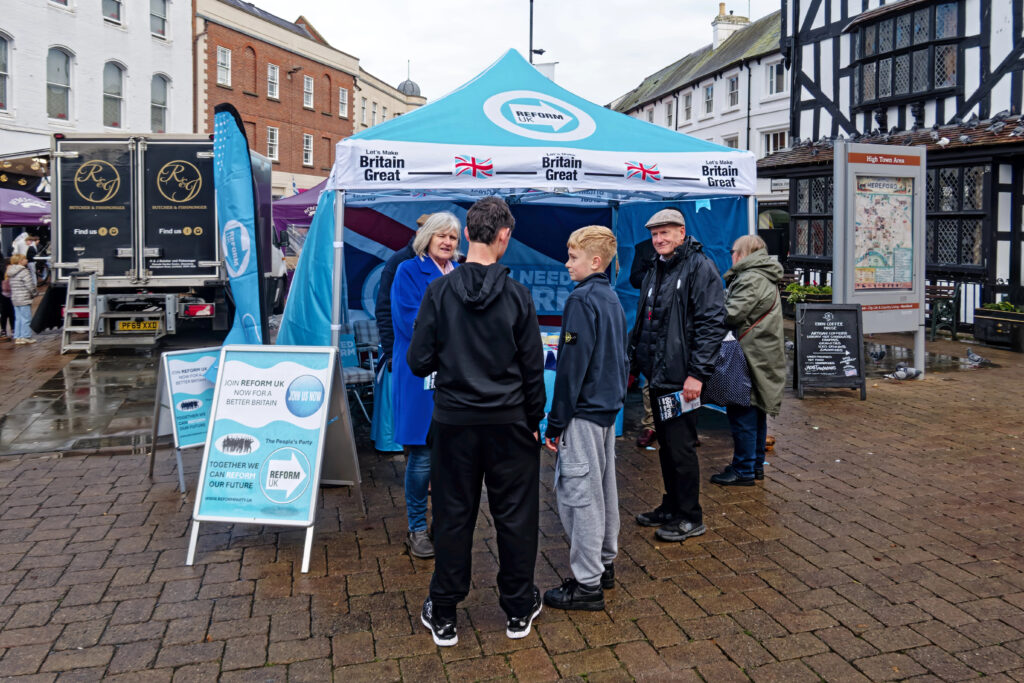
“Cut Energy Bills – Reform UK will abolish VAT on Britain’s domestic fuel costs and save £200 on your energy bills. Make the most of North Sea oil and gas industries.” 

Reform UK (Scotland)

With the economy (and the cost of energy in particular) continuing to dominate public concerns, finding examples like this isn’t necessarily surprising.

But we should recognise that where we see examples of fairness frames being used to communicate messages about renewables, this reflects a consensus among climate communicators on the critical role that fairness (and perceived fairness) plays in securing long term support for the transition.

Local context is driving the discourse – not a ‘national climate conversation’

Beyond energy affordability and fairness framings, the other key way that climate showed up was via hyper-local issues. In four out of the five regions we focused on, transport was a major focus.

Buses, cycling – and of course roads and potholes – appeared on leaflets from the Greens to Reform UK – aligning with the key local issues raised in pre-election polling. In many cases, the language functioned as a measure of service competence rather than environmental concern. But given that transport accounts for nearly a third of the UK’s domestic emissions, hyper-local discussions about safe cycling routes and low traffic neighbourhoods represent key climate battlegrounds.

In a similar way, whilst the impacts of climate change are a global problem, they can only ever be directly experienced in a particular place at a particular time. National climate impacts were largely absent from the leaflets. But we found a few examples of local risks – flooding in particular – being mentioned in the context of climate change:

Flooding will continue to become more frequent and more severe. It feels like we have a 1 in 10 year event every year and it is only a matter of time before we see damage to our bridges. We have the opportunity to be proactive but the window is closing.” 

Green Party (Kedinton, Suffolk)

“Addressing climate change as chair of the Broadland Futures Initiative elected members forum to develop an adaptation plan for flooding across The Broads.” 

Green Party (Broadland, Norfolk)

In terms of how these real-life local examples match up to the evidence base on climate communication, they’re doing a pretty good job: not talking about climate in the abstract but grounding it in the here-and-now and telling a story that is pertinent and personal to the specific intended audience.

Finally, there were plenty of examples of language around preserving local green space and preventing pollution and fly-tipping.

It would be a stretch to say that these represent local ‘climate’ communication – but it is well established through Climate Outreach’s Britain Talks Climate & Nature resource that key segments of the British public – like Rooted Patriots – have high threat perception (for things like local flood risks) and care about hyper-local environmental problems (like protecting greenspace and preventing fly tipping).

So whilst the examples cited here formed a small part of the election materials we analysed, many of them are following or embodying the evidence base on what makes for good climate communication.

The challenge ahead is perhaps less about pushing for more explicit mentions of climate change as a standalone issue, and more about growing confidence among communicators of all political stripes to build on the examples here and increase the volume of locally ‘embodied’ climate language.

Because now that both climate policies and impacts are experienced locally, it’s arguably here that effective communication on climate change matters the most.

The latest from the Net Zero timeline:

View Net Zero timeline now

Add Feedback